
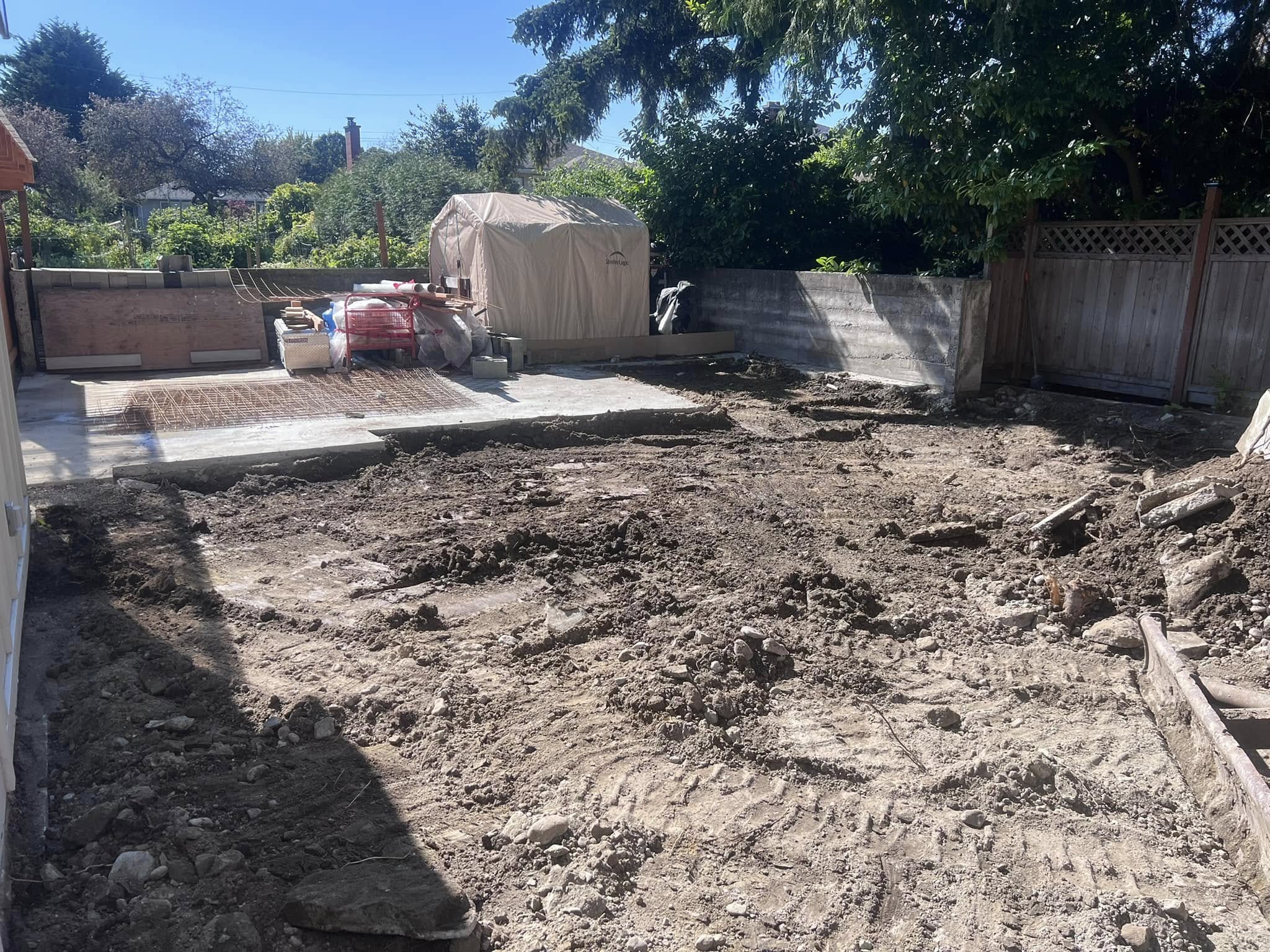
Don't wait for an atmospheric river to test your foundation drains. Learn how to inspect, clean, and prepare your perimeter drainage for a wet West Coast winter.
Around Langford and across Vancouver Island, fall doesn't just bring cooler air and changing leaves—it brings the start of our legendary wet season. When an atmospheric river rolls in off the Pacific, your home's foundation relies entirely on one hidden system to stay dry: your perimeter drainage.
Also known as drain tile, this system of pipes running around the base of your foundation is your home's primary defense against water damage. If it is clogged, collapsed, or overloaded, that water has nowhere to go but inside your crawlspace or basement. Taking a few proactive steps in the fall can save you thousands of dollars in emergency repairs, excavation, and mold remediation.
Here is a practical guide to getting your perimeter drains ready for the BC winter.
1. Start on the Roof: Clean the Gutters and Downspouts
It might seem strange to start drainage prep on the roof, but your gutters and perimeter drains are connected parts of the same system. When leaves, moss, and pine needles clog your gutters, rainwater overflows. Instead of being piped safely away, thousands of gallons of water dump directly next to your foundation.
This sudden deluge completely saturates the soil and puts immense pressure on your perimeter drains. Make sure to:
- Clear all debris from your gutters before the heavy rains start.
- Flush downspouts with a garden hose to ensure they flow freely.
- Verify that downspout extensions are directing water at least 5 to 6 feet away from your foundation wall, or directly into a solid storm drain pipe (not your perforated drain tile).
2. Locate and Clear Your Discharge Points
Where does your drainage system actually go? For some properties, it connects directly to the municipal storm sewer. For others, especially in rural areas or older neighborhoods around the Lower Mainland and Island, it drains to a ditch, a dry well, or a pop-up emitter in the yard.
Find these exit points and make sure they aren't blocked by leaves, overgrown roots, or silt. If water cannot escape the exit pipe, it will back up into your perimeter drains and eventually pool around your basement floor.
3. Check the Soil Grading Around Your Foundation
Over time, the soil surrounding your home can settle, creating low spots or slopes that angle back toward your house. During a heavy downpour, these depressions act like funnels, directing surface water straight to your foundation.
Take a walk around your home. The ground should slope away from your foundation at a rate of about one inch of drop per foot for the first six feet. If you notice sunken areas, fill them with a dense soil or clay mix (not loose bark mulch, which just lets water soak right through) to shed water away from the walls.
4. Watch for Warning Signs of Drainage Failure
Sometimes your drainage system is already struggling, but you don't notice it until the ground is completely saturated. Keep an eye out for these red flags:
- Soggy spots in the yard: If patches of your lawn remain spongy or wet days after the rain stops, your drain tile may be clogged or collapsed in that area.
- Efflorescence on concrete walls: This is a white, powdery residue left behind on your basement or crawlspace walls when water evaporates. It means moisture is actively migrating through your concrete.
- Musty smells: A damp, earthy odor in your basement is a classic sign of standing water or high humidity caused by failing perimeter drains.
- Water pooling near the foundation: During a heavy storm, step outside and look for puddles sitting right against your stucco or siding.
5. The BC Context: Older Clay Pipes vs. Modern PVC
If your home was built before the mid-1980s, there is a high chance your perimeter drain system is made of clay tile or concrete pipes. Over decades, these systems degrade. The joints shift, clay tiles crack under soil weight, and thirsty tree roots find their way inside to feed on the water, completely blocking the flow.
Modern homes use perforated PVC pipe wrapped in landscape fabric and buried in drain rock. While much more durable, even PVC systems can eventually fill with fine silt or become crushed by heavy equipment or settling soil.
When to Call a Professional
Some drainage tasks are easy weekend DIY projects. However, if your gutters are clear but you still have a damp basement, or if you suspect your old clay tile pipes have finally collapsed, it is time to bring in professional help.
A professional drainage contractor can run a specialized camera scope down your line to pinpoint exactly where a blockage or break is located. This prevents unnecessary digging and saves you money by identifying whether you need a simple hydro-jetting flush or a targeted spot repair.
If your system has completely failed, we can design and excavate a modern, BC Building Code-compliant drainage system that will keep your home dry for decades to come.
If you are worried about how your home will handle the next big coastal storm, let us take a look. Contact Char at AV Contracting at (250) 886-1112 for a free drainage assessment.
Assessments are free. Send us a photo or give us a call — we'll tell you straight whether it's a DIY fix or a job for the crew.