
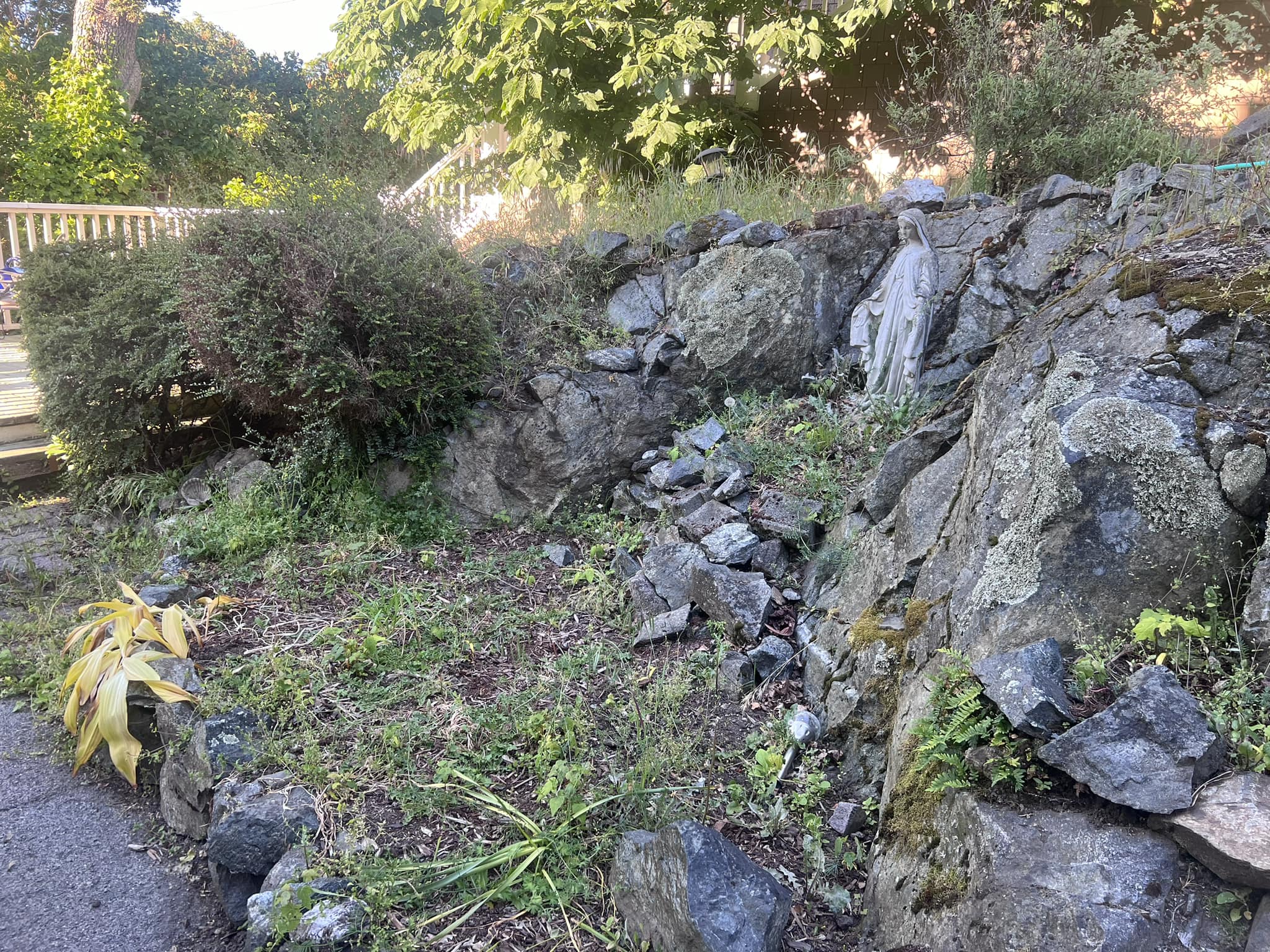
Don't let wet coast winters wash away your yard. Learn how to protect your sloped property from erosion and runoff before the heavy seasonal rains arrive.
Every homeowner on Vancouver Island and the Lower Mainland knows that when the autumn wind shifts, the heavy rains aren't far behind. We aren't just talking about a light drizzle; our coastal winters bring intense atmospheric rivers that dump weeks' worth of water in a matter of days.
If your property has a slope, this seasonal deluge isn't just an inconvenience—it's a threat to your landscape, your driveway, and even your home's foundation. Uncontrolled water runoff can quickly wash away topsoil, undermine slopes, and cause costly structural damage.
Here is a practical guide to understanding erosion on sloped lots and how to secure your property before the winter rains hit.
Why Sloped Lots are Vulnerable in BC
Our local geology plays a big role in how water behaves on your property. In places like Langford, Colwood, and across the island, we often deal with a thin layer of topsoil over heavy clay or solid bedrock.
When heavy rain hits:
- Saturation comes quickly: The top layers of soil saturate fast because the water can't penetrate the clay or rock beneath.
- Velocity builds: As water runs down a slope, it gains speed. The faster it moves, the more soil it carries with it.
- Freeze-thaw cycles: While our winters are relatively mild, we do get freeze-thaw cycles. When wet soil freezes, it expands, loosening the ground. When it thaws, that loose soil is easily washed away by the next rainfall.
Quick Temporary Fixes (The Fall Prep)
If you have bare soil or a recently cleared slope and winter is just around the corner, you need to act fast. These temporary measures can buy you time until a permanent solution can be engineered.
- Cover Bare Dirt: Never leave exposed soil to face a BC winter. Use straw mulch, wood chips, or heavy-duty plastic sheeting/tarps weighed down with sandbags.
- Install Straw Wattles: These are long, tube-like sausages of straw wrapped in netting. Stake them horizontally across your slope. They slow down water runoff and trap sediment.
- Silt Fencing: If you are actively working on the site, a properly trenched silt fence at the bottom of the slope will catch eroding soil before it runs into neighboring properties or municipal storm drains.
Permanent Solutions for Sloped Properties
Temporary fixes won't last forever. To truly secure your sloped property, you need to address the root causes of erosion: water volume, water velocity, and soil stability.
1. Divert and Manage the Water (Drainage)
You can't stop the rain, but you can control where it goes.
- French Drains and Curtain Drains: These gravel-filled trenches intercept groundwater moving down a slope and redirect it safely away from your home.
- Catch Basins: Placing basins at low points or transition areas helps collect surface runoff and channel it into solid pipe drainage systems.
- Swales: A gently sloped, rock-lined ditch (a dry creek bed) can naturally guide water across your property without washing away the soil.
2. Terracing with Retaining Walls
Breaking a steep slope into a series of flat terraces is one of the most effective ways to stop erosion. By leveling the ground, you eliminate the velocity of the water.
- Gravity and Lock-Block Walls: Great for heavy-duty stabilization.
- Rock Walls: Offer a natural, rugged look that blends into the BC landscape while providing excellent drainage.
- The Rules: Keep in mind the BC Building Code. In most municipalities, any retaining wall over 1.2 meters (4 feet) in height requires structural engineering and a building permit.
3. Plant Deep-Rooted Vegetation
Plants are nature’s rebar. While grass has shallow roots, native BC plants like Salal, Oregon Grape, and various ferns have deep, fibrous root networks that bind the soil together. Combine planting with coconut coir erosion blankets on steep slopes to hold the dirt in place while the roots establish.
When to Call a Pro
Some erosion issues are simple DIY projects, but others require heavy machinery and technical expertise. You should call in an excavation and drainage professional if:
- You see active signs of slope failure, such as leaning trees, cracks opening in the soil, or bulging retaining walls.
- Water is pooling near your home's foundation or crawlspace.
- Your slope is steep, inaccessible, or requires a retaining wall over 1.2 meters.
- You need heavy site-grading to redirect major runoff patterns.
Dealing with slopes requires a clear understanding of soil mechanics, water flow, and local regulations. Investing in professional site prep and drainage now is always cheaper than repairing a collapsed slope or a flooded basement later.
If you are worried about how your sloped property will handle the upcoming winter rains, we can help.
Contact Char at AV Contracting at (250) 886-1112 for a free sloped-property drainage assessment.
Assessments are free. Send us a photo or give us a call — we'll tell you straight whether it's a DIY fix or a job for the crew.